Industrial cables rarely operate in clean, motionless conditions. A sensor cable may rub against a machine frame. A wiring bundle may vibrate beside a motor. During maintenance, technicians may need to replace one cable without dismantling the entire assembly.
Wrap around sleeving provides a practical way to add an outer protective layer while keeping cables accessible. Its longitudinal opening allows installation around an existing cable bundle, making it particularly useful for equipment upgrades, repairs and harness assembly. Self-wrapping sleeves are widely used in industrial machinery, electronics and electrical engineering for abrasion protection and cable management.
However, choosing the right sleeve requires more than matching its nominal diameter to the cable bundle. Material, construction, closure design and operating conditions all affect performance.
What Is Wrap-Around Sleeving?
Wrap-around sleeving is a protective covering that opens along its length and wraps around cables, wires or harnesses. Unlike a closed tubular sleeve, it generally does not need to pass over connectors during installation.
Common designs include:
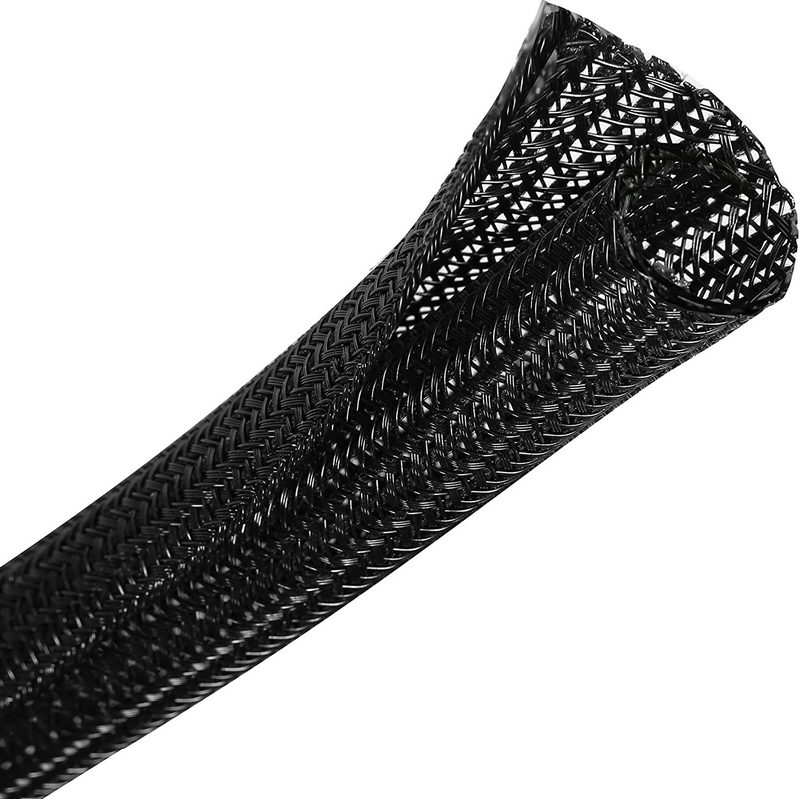
Split braided sleeving:Overlapping edges return around the bundle after installation.
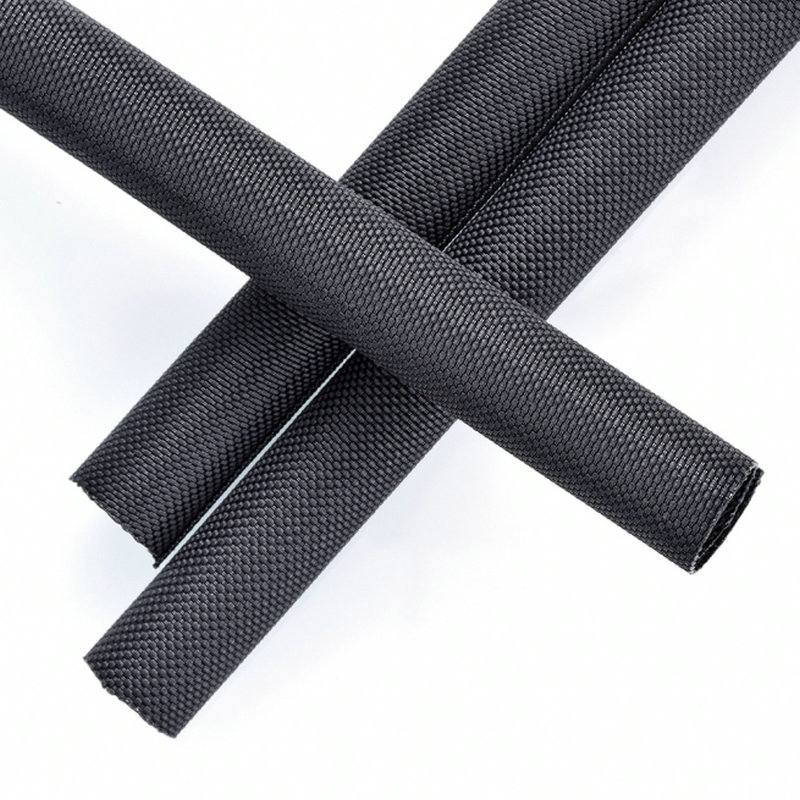
Woven wrap around sleeve:A woven construction provides coverage and a flexible outer surface.
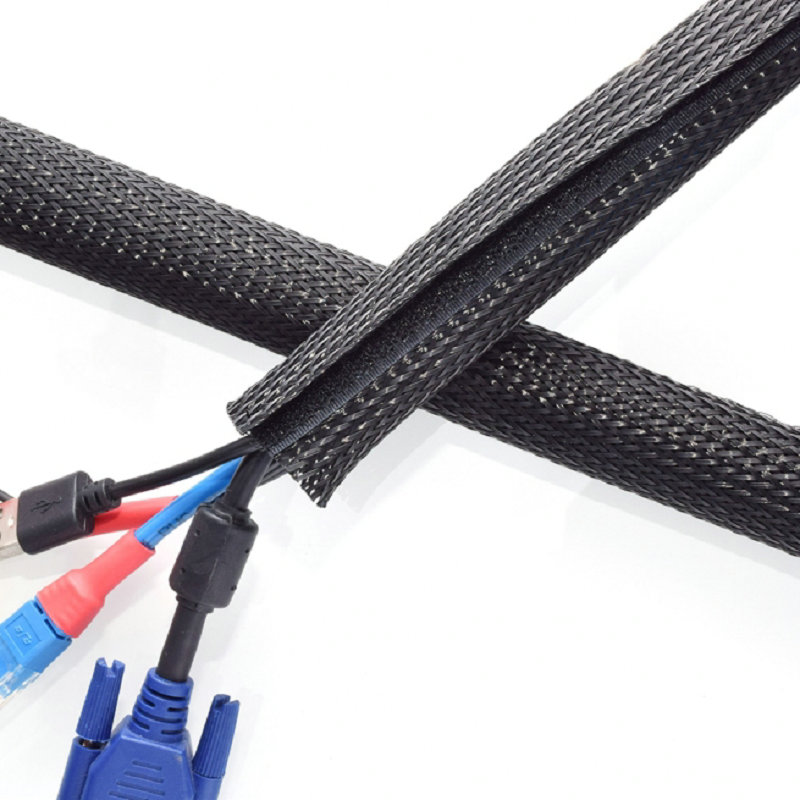
Hook and loop cable sleeving:A reusable closure allows access along the protected section.
Zipper cable sleeving:A zipper joins the edges around the cable bundle.
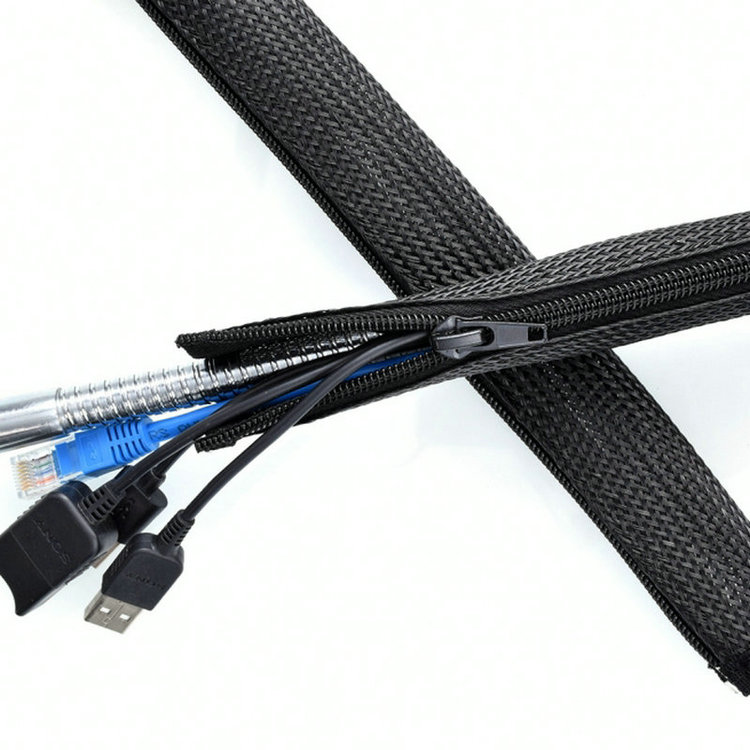
These designs serve different needs. Self-closing sleeving can simplify installation along a harness, while hook-and-loop or zipper closures may suit assemblies that require regular access.
How Does Wrap-Around Sleeving Protect Industrial Cables?
1. It Adds a Layer Against Abrasion
Repeated contact can gradually wear a cable jacket. Typical contact points include brackets, equipment housings and adjacent cable bundles.
A suitable sleeve places a replaceable layer between the cable jacket and the contact surface. The level of protection depends on the yarn, weave, wall construction and conditions of use. Heavy-duty wrap-around products are also available for more demanding chafing and abrasion applications.
Sleeving should accompany good routing practices. Sharp edges still require appropriate edge protection, and unsupported cables may need additional clamps.
2. It Helps Manage Contact During Vibration
On vibrating equipment, cables can repeatedly touch nearby surfaces. An appropriate textile sleeve can help reduce direct contact and, in some applications, associated rattling.
This does not eliminate movement. The bundle still needs suitable support, sufficient clearance and a routing path that avoids concentrated rubbing.
3. It Keeps Cable Bundles Organized
Grouping cables inside a sleeve creates a more manageable harness. This can help technicians follow a cable route, identify branches and work around nearby components.
The bundle should remain compatible with the equipment’s thermal and electrical requirements. A neat appearance alone does not confirm that the routing is suitable.
4. It Makes Existing Harnesses Easier to Access
A major advantage of wrap-around construction is access after installation. Technicians can open the sleeve to inspect or replace a cable, then close it again if the sleeve remains serviceable.
This is useful when connectors are larger than the cable bundle or when disconnecting equipment would add substantial work.
Where Is Wrap-Around Cable Sleeving Used?
Industrial application
|
Typical protection need
|
Main selection consideration
|
Manufacturing machinery
|
Chafing near frames and brackets
|
Abrasion performance and secure routing
|
Control cabinets
|
Organized wiring with maintenance access
|
Bundle size, closure and available space
|
Packaging equipment
|
Protection around sensors and actuators
|
Flexibility and resistance to local exposure
|
Equipment retrofits
|
Covering cables already fitted with connectors
|
Ease of installation and reopening
|
Moving assemblies
|
Protection during repeated movement
|
Application-specific flex testing
|
For robotic arms, drag chains and other continuously moving systems, confirm suitability through representative testing. A flexible sleeve is not automatically rated for repeated bending or torsion.
How to Choose the Right Wrap-Around Sleeving
Measure the Complete Bundle
Measure the assembled bundle at its largest point, including crossings and local variations.
For self-closing sleeving, check the manufacturer’s recommended bundle range and required overlap. Overfilling can pull the edges apart, leaving cables exposed. Excessively loose sleeving may shift or catch on surrounding components.
Match the Material to the Environment
PET is a common option for general cable bundling and abrasion protection. Nylon constructions may be considered where wear resistance is a priority. Specialized materials or coatings may be needed for higher temperatures or particular environmental exposures.
Review the finished product's specifications rather than relying only on the material name.
Confirm Specific Performance Requirements
Ask for data relevant to the application:
- Continuous operating temperature
- Abrasion test method and results
- Flame test classification, where required
- Resistance to oils, cleaners or other chemicals present
- UV performance for outdoor exposure
- Closure retention and movement performance
Standard textile sleeving should not be assumed to provide liquid sealing, electrical insulation, EMI shielding or protection from welding spatter. These functions require specifically designed products and supporting documentation.
Installation Tips for Reliable Protection
Before fitting the sleeve, inspect the cables and correct damaged jackets, sharp contact points or poor routing.
Cut and finish the sleeve according to the manufacturer’s instructions. Position the opening away from the main rubbing surface where practical, and secure the ends without compressing the cables excessively.
After installation, check the assembly through its full operating movement. Look for opened seams, shifting, snagging and tight bends. Reinspect high-contact areas during scheduled maintenance.
Frequently Asked Questions
Can wrap-around sleeving be installed without removing connectors?
Usually, yes. The longitudinal opening allows the sleeve to be fitted around an existing bundle. Installation access still depends on the surrounding equipment.
Is wrap-around sleeving waterproof?
Standard braided and woven versions generally do not form a watertight enclosure. Applications exposed to washdown or liquid ingress need an appropriately rated protection system.
Can one sleeve protect cables against abrasion, heat and EMI?
Only if the specific construction is designed and verified for those requirements. General-purpose abrasion sleeving should not be treated as a universal protective solution.
Selecting Wrap-Around Sleeving for Your Equipment
The best starting point is the actual cable route: where the bundle rubs, how it moves, what it is exposed to and how often technicians need access.
MJ FLEX helps customers evaluate wrap-around sleeving according to bundle dimensions, operating conditions and maintenance requirements. Share your application details, required quantity and relevant performance specifications to discuss suitable options and samples for evaluation.




 IPv6 network supported
 English